Bitcoin ETFs Bleed $516M as Traders Abandon Ship: Is the ‘Risk-Free’ Money Printer Breaking Down?

U.S. Bitcoin ETFs just recorded their second-largest outflow of 2025, with over half a billion dollars exiting in a single day as Bitcoin tumbled below the critical $90,000 mark. Behind the scenes, a once-profitable trading strategy is crumbling as yields fall below Treasury rates.
Mass Exodus from Bitcoin ETFs
On Monday, investors pulled a staggering $516.4 million from U.S. spot Bitcoin ETFs, marking the second-biggest single-day outflow this year, according to Farside data. This withdrawal represents the ninth net outflow in just ten days, highlighting growing investor anxiety as Bitcoin has struggled to break out of its recent $94,000-$100,000 range.
The situation worsened Tuesday when Bitcoin finally broke through its three-month support channel, plummeting below $90,000 and touching lows of $88,250.
The Broken Basis Trade
A key driver behind these outflows appears to be the collapse of the once-lucrative “basis trade” – a market-neutral strategy many institutional investors have employed since the ETFs launched in January 2024.
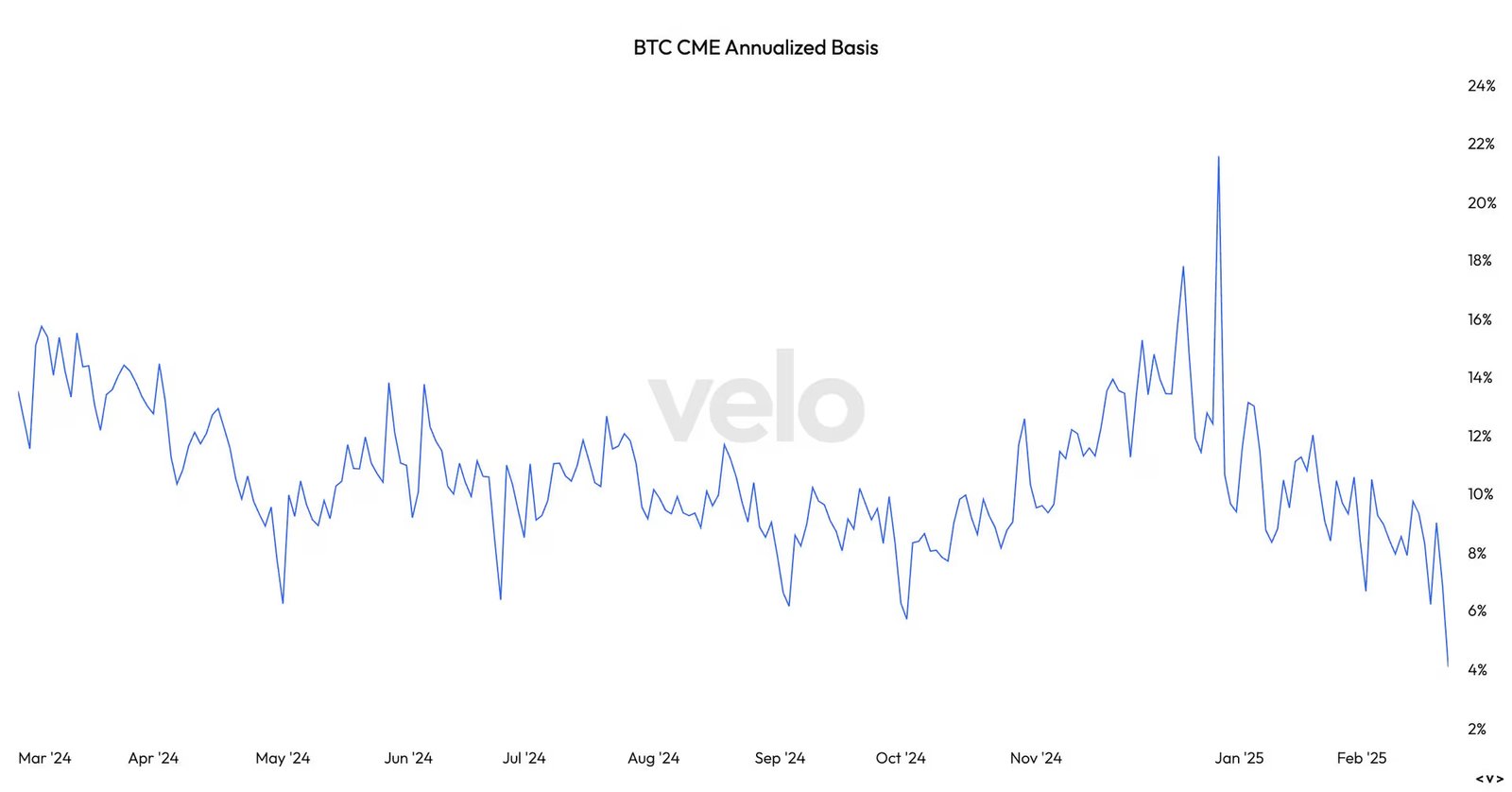
Bitcoin CME annualized basis (Velo)
According to Velo data, the Bitcoin CME annualized basis – essentially the premium between Bitcoin’s spot price and futures contracts – has fallen to just 4%. This marks its lowest level since the ETFs began trading.
The basis trade involves simultaneously going long on spot Bitcoin (through ETFs) and shorting Bitcoin futures contracts. Traders pocket the premium between these two prices until the futures contract expires. It’s been a reliable, nearly risk-free profit mechanism for institutions – until now.
Treasury Yields Now More Attractive
With the basis trade premium falling below 5%, it now yields less than the “risk-free” U.S. 10-year Treasury. This fundamental shift is forcing many institutional traders to reconsider their positions.
Arthur Hayes, co-founder of BitMEX, highlighted this exact scenario on X (formerly Twitter): “Lots of IBIT holders are hedge funds that went long ETF short CME future to earn a yield greater than where they fund, short term US treasuries,” he wrote. “If that basis drops as bitcoin falls, then these funds will sell IBIT and buy back CME futures. These funds are in profit, and given basis is close to UST yields they will unwind during US hours and realise their profit. $70,000 I see you mofo!”
As these institutional investors unwind their positions – selling their ETF holdings and closing futures shorts – further outflows could accelerate Bitcoin’s downward momentum.
The unwinding of this trade comes at a critical juncture for Bitcoin, which had been consolidating near all-time highs for weeks. With this key institutional buying pressure potentially evaporating, many traders are now watching to see if Hayes’ $70,000 price target might become reality.
Stay ahead of market moves!
Beat the crowd to every crypto opportunity with our exclusive, free newsletter delivered daily to your inbox.
By subscribing, you agree to Crypto Market Digest's Terms and Privacy Policy.
Disclaimer:
The information provided on this blog is for informational and educational purposes only and does not constitute financial, investment, legal, or other professional advice. Cryptocurrency investments are highly volatile and carry significant risk. Always conduct your own research and consult with a qualified financial advisor before making any investment decisions. We do not endorse or guarantee the accuracy or completeness of any third-party content linked or referenced on this site. By using this blog, you agree that the authors and publishers are not responsible for any losses or damages resulting from your reliance on the information provided.