Bitcoin’s Shocking Role Reversal: Now CALMER Than Wall Street’s Volatility
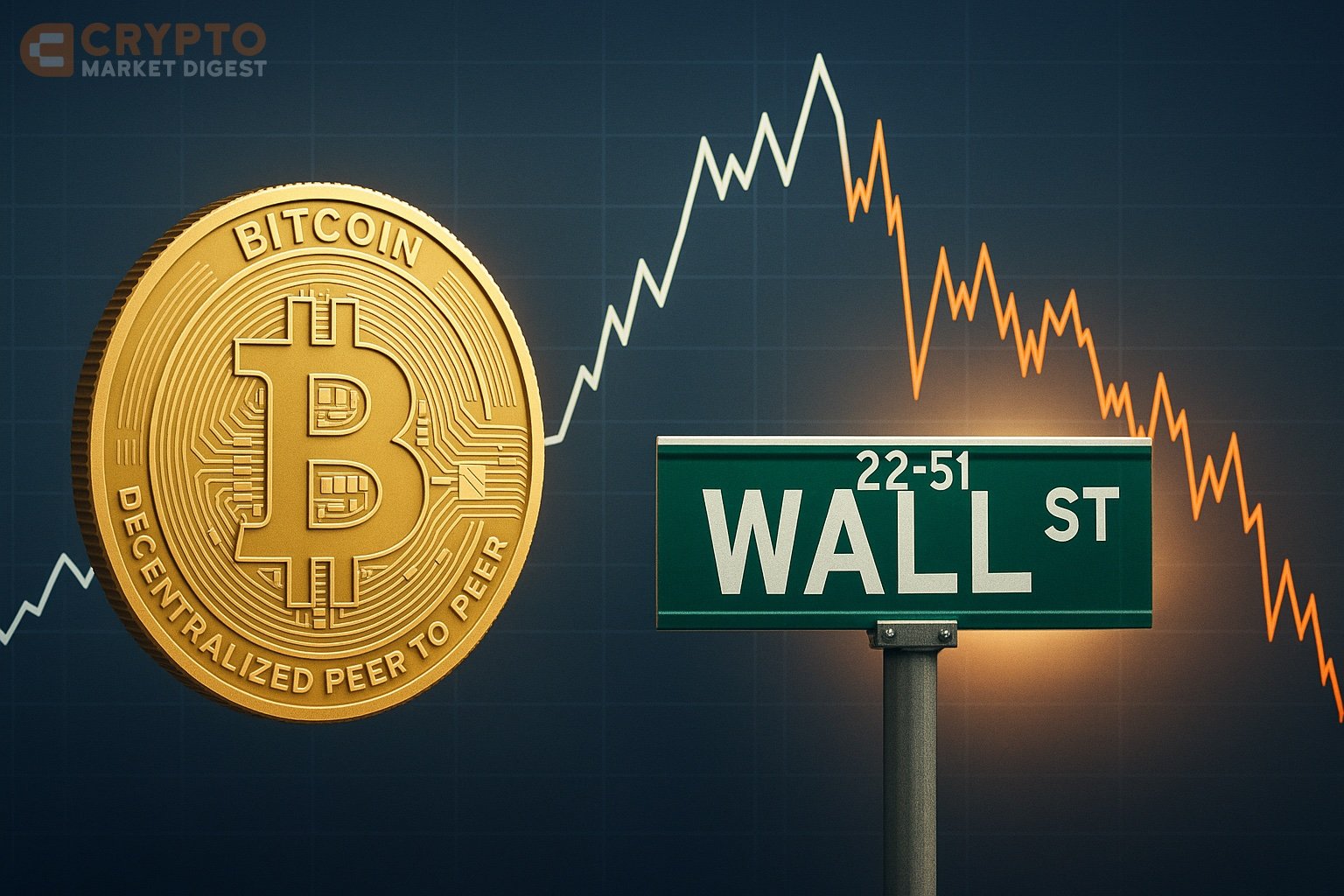
In a stunning market shift, Bitcoin—long criticized for its volatility—has become a picture of relative stability compared to traditional U.S. financial markets as investors flee American assets following President Trump’s aggressive trade policies.
Recent data reveals an extraordinary reversal: the S&P 500’s seven-day realized volatility has skyrocketed to 169% (annualized), while Bitcoin’s volatility sits at just 83%. This remarkable contrast raises serious questions about conventional investment wisdom.
Since Trump’s April 2nd “Liberation Day” tariff announcement, traditional financial markets have experienced unprecedented turbulence. The S&P 500’s volatility surge represents its highest level since the 2020 coronavirus crash, according to TradingView data.
Meanwhile, Bitcoin’s emerging role as a lower-volatility alternative suggests it may be evolving into something Wall Street never anticipated—a relatively stable hedge against stock market chaos.
“Equity markets [have] experienced a dramatic spike in volatility—surpassing that of Bitcoin, which is currently seeing a decline in volatility,” noted James Butterfill, CoinShares’ Head of Research, in an email. “This raises the question: should investors place their trust in assets that are highly susceptible to political influence and human error, or in a mathematical framework and emerging store of value that is more resilient to such risks?”
Investors Abandon U.S. Assets
The broader financial picture shows alarming signs for traditional U.S. investments. The S&P 500 has plummeted 14% in under two months, primarily due to escalating trade war concerns. Both the tech-heavy Nasdaq and Dow Jones Industrial Average have suffered similar losses.
Historically, such risk aversion would drive investors toward U.S. Treasury notes and the dollar. However, recent days have shown a dramatic departure from this pattern.
Since last Friday, investors have aggressively sold Treasury notes, pushing yields higher, while the dollar index has continued its downward trajectory. The benchmark 10-year bond yield has jumped by 62 basis points to 4.45%, and the dollar index has fallen to 100—its lowest level since late September.
This simultaneous rise in yields and currency depreciation represents a rare and troubling pattern for the U.S. economy. As Evercore ISI explained (according to Wall Street Journal’s Chief Economic Correspondent Nick Timaros): “Yields higher, currency lower is common in EM. We saw this in the UK during the Truss debacle. But it is highly abnormal for the US: there are only four other episodes in the last 30 years in which the dollar depreciated more than 1.5% with the 30-year yield up more than 10bp.”
Evercore added that this trend “reflects evaporating US growth exceptionalism and the reduced attraction at the margin of dollar assets for reserve purposes amid erratic US decision-making.”
As traditional U.S. assets face unprecedented challenges, Bitcoin’s relative stability poses profound questions about the future of global investment strategies and risk management.
Stay ahead of market moves!
Beat the crowd to every crypto opportunity with our exclusive, free newsletter delivered daily to your inbox.
By subscribing, you agree to Crypto Market Digest's Terms and Privacy Policy.
Disclaimer:
The information provided on this blog is for informational and educational purposes only and does not constitute financial, investment, legal, or other professional advice. Cryptocurrency investments are highly volatile and carry significant risk. Always conduct your own research and consult with a qualified financial advisor before making any investment decisions. We do not endorse or guarantee the accuracy or completeness of any third-party content linked or referenced on this site. By using this blog, you agree that the authors and publishers are not responsible for any losses or damages resulting from your reliance on the information provided.