Meme Coins Crash, AI Tokens Rise, and MiCA Reshapes European Crypto Market
The cryptocurrency landscape has seen dramatic shifts in early 2025, with meme coins experiencing a major downturn, AI-generated tokens emerging as disruptive technology, and Europe’s MiCA regulation transforming the regulatory environment.
Meme Coin Market Collapse Following Presidential Token
January 2025 saw the TRUMP token reach an unprecedented $8.8 billion market capitalization, setting a record for meme coin launches. The subsequent crash left retail investors suffering substantial losses when insider traders sold their holdings for millions in profits.
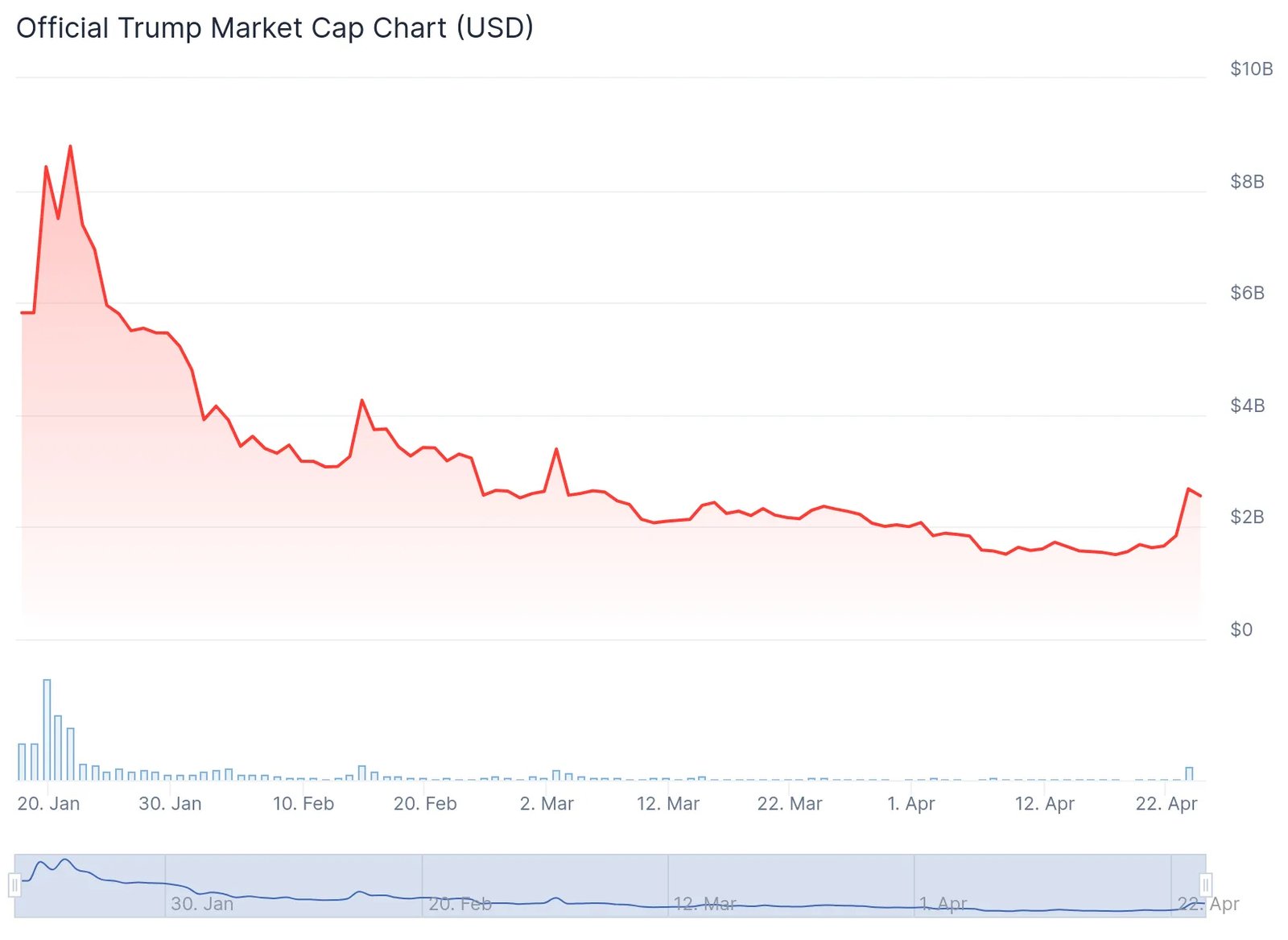
Official Trump Meme Coin Market Cap Chart (Credit: CoinGecko)
“The decline in meme coin market cap since January can be attributed to a combination of market dynamics and sentiment shifts,” explained Eric He from LBank, noting that the TRUMP token crash eroded investor confidence across the market.
Despite the downturn, meme coins maintain a significant $57 billion market capitalization with $14.5 billion in trading volume. LBank experts believe this represents a “healthy market correction” rather than the end of meme coins.
AI’s Emerging Role in Token Creation
Systems like Grok are now autonomously designing and launching tokens without human involvement, representing a major shift in cryptocurrency development.
According to LBank, AI-generated tokens could “unleash a wave of experimentation” by simplifying token creation and reducing technical barriers. This technology could potentially democratize access to token creation, allowing non-technical creators to launch tokens without coding knowledge.
However, security remains a critical concern, with the speed of AI-driven creation potentially outpacing regulatory oversight, which could lead to increased scams and low-quality projects flooding the market.
MiCA’s Impact on European Crypto Business
Nearly five months after implementation, Europe’s Markets in Crypto-Assets (MiCA) regulation has established the first comprehensive crypto regulatory framework across EU member states. Major players like Standard Chartered and Crypto.com have already secured licenses.
The regulation has enhanced transparency and compliance, creating “a safer, more predictable environment” for users and encouraging traditional financial institutions to explore crypto partnerships with reduced reputational risk.
However, MiCA’s substantial capital requirements—ranging from €50,000 to €150,000 depending on services offered—present significant barriers for startups and smaller crypto businesses. While established exchanges like LBank can absorb these costs, future regulatory updates may need to address accessibility for smaller market participants.
Stay ahead of market moves!
Beat the crowd to every crypto opportunity with our exclusive, free newsletter delivered daily to your inbox.
By subscribing, you agree to Crypto Market Digest's Terms and Privacy Policy.
Disclaimer:
The information provided on this blog is for informational and educational purposes only and does not constitute financial, investment, legal, or other professional advice. Cryptocurrency investments are highly volatile and carry significant risk. Always conduct your own research and consult with a qualified financial advisor before making any investment decisions. We do not endorse or guarantee the accuracy or completeness of any third-party content linked or referenced on this site. By using this blog, you agree that the authors and publishers are not responsible for any losses or damages resulting from your reliance on the information provided.